


Dealership Blog
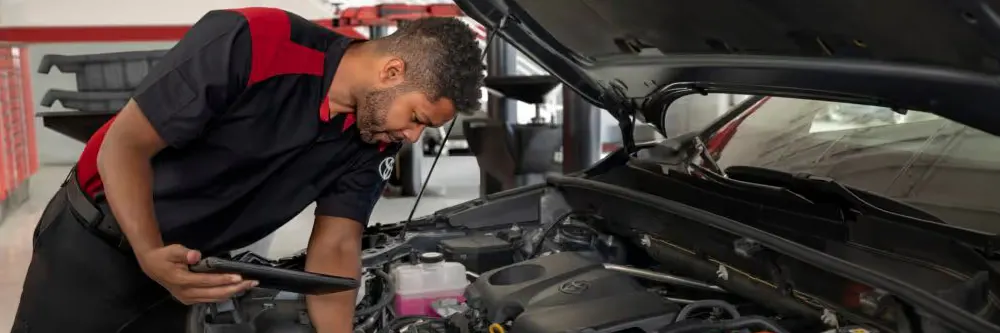
Toyota Maintenance Schedule Explained: What Your Toyota Needs and When
Keeping up with routine maintenance is one of the best ways to protect your Toyota’s performance, reliability, efficiency, and long-term value. But knowing exactly when your vehicle needs an oil change, tire rotation, fluid inspection, or other service is not always as simple as following one universal schedule.
Your Toyota’s maintenance needs can vary based on the model, model year, mileage, powertrain, driving conditions, and how the vehicle is used. That is why Toyota owners should use the maintenance schedule for their specific vehicle as the primary source for service intervals.
At Toyota Marin in San Rafael, our service team can help Toyota owners throughout Marin County, San Francisco, and the surrounding Bay Area understand what their vehicle needs and when it may be time to schedule maintenance.
Why Following Your Toyota Maintenance Schedule Matters
Routine maintenance is not just about responding when a warning light appears or something does not feel right. Preventive maintenance is designed to help identify potential concerns and keep important vehicle systems operating as intended.
Staying current with your Toyota’s recommended maintenance can help:
- Maintain dependable vehicle performance
- Support fuel efficiency
- Reduce unnecessary wear on important components
- Identify developing issues before they become larger repairs
- Maintain braking, steering, and handling performance
- Protect your vehicle’s long-term value
- Maintain an accurate record of vehicle maintenance
For drivers who plan to keep their Toyota for many years, a consistent maintenance history can be particularly valuable.
How Often Does a Toyota Need Maintenance?
There is not one maintenance schedule that applies to every Toyota.
The appropriate intervals depend on your specific vehicle and driving conditions. Toyota’s maintenance recommendations may include service based on time, mileage, or both, which is why it is important to consult the maintenance information provided for your particular model and model year.
Some vehicles may also have different requirements depending on whether they use a gasoline, hybrid, plug-in hybrid, or other powertrain. Rather than relying on a generic mileage chart found online, Toyota owners should follow the recommendations associated with their individual vehicle.
What Is Typically Included in Routine Toyota Maintenance?
The services your Toyota requires change as the vehicle accumulates miles. A routine maintenance visit may involve inspections, adjustments, rotations, fluid checks, or replacement of certain maintenance items when required.
Engine Oil and Oil Filter
Engine oil helps lubricate and protect moving engine components. Over time, oil can become contaminated and lose some of its effectiveness. Oil-change requirements vary by Toyota model, engine, oil specification, and operating conditions. Your vehicle’s recommended maintenance schedule should determine when the engine oil and filter need to be replaced.
Tire Rotation and Inspection
Regular tire rotations can help promote more even tread wear and maximize the useful life of your tires. A technician can also inspect:
- Tire tread depth
- Tire pressure
- Uneven wear patterns
- Cuts, punctures, or other visible damage
- General tire condition
Brake Inspection
Your Toyota’s braking system should be inspected periodically even when the brakes appear to be working normally. A brake inspection may include checking the brake pads, rotors, fluid, and other components for wear or potential concerns. If you notice squeaking, grinding, vibration, a change in pedal feel, or increased stopping distance, do not wait for your next scheduled maintenance visit to have the brakes inspected.
Fluid Inspection
Modern Toyotas rely on several fluids to operate properly. Depending on your model, technicians may inspect fluids associated with systems such as the brakes, cooling system, transmission, and windshield washers. Fluid requirements and replacement intervals vary by vehicle, so your Toyota’s specific maintenance information should always take precedence over a generalized schedule.
Engine and Cabin Air Filters
Your Toyota may have both an engine air filter and a cabin air filter. The engine air filter helps prevent contaminants from entering the engine’s air intake, while the cabin air filter helps filter the air entering the passenger compartment through the climate-control system. Replacement frequency can depend heavily on driving conditions.
Battery Inspection
Battery performance can decline gradually, and a vehicle that starts normally today can still develop a weak battery over time. Routine service provides an opportunity to inspect the battery and related components. If you have noticed slow starting, electrical issues, or other unusual behavior, a battery test may help determine whether additional attention is needed.
Do Toyota Hybrids Have Different Maintenance Needs?
Toyota hybrid vehicles still require routine maintenance, but some maintenance needs differ from those of conventional gasoline-powered vehicles.
A Toyota hybrid still has components such as tires, brakes, fluids, filters, and, when equipped with a gasoline engine, engine oil that require periodic attention.
Hybrid vehicles also incorporate specialized components and systems. Following the maintenance recommendations for your specific Toyota hybrid model is particularly important rather than assuming its schedule is identical to a conventional vehicle.
Does San Francisco Bay Area Driving Affect Maintenance?
It can. How and where you drive can influence vehicle wear. Drivers traveling between San Francisco, San Rafael, Marin County, and other parts of the Bay Area may encounter frequent stop-and-go traffic, hills, short trips, changing temperatures, and coastal conditions.
Driving conditions that place additional demands on certain vehicle components may make regular inspections especially important. Frequent stop-and-go driving can increase use of the braking system, while tire condition remains important for vehicles regularly navigating hills, curves, and wet roads.
Your owner’s documentation can help determine whether your driving habits fall under conditions that call for additional maintenance considerations.
What Does “Maintenance Required” Mean on a Toyota?
If your Toyota displays a maintenance reminder, it does not necessarily mean something is wrong with the vehicle. Maintenance reminders are intended to help owners stay aware of scheduled vehicle care. Because warning indicators and reminder systems can vary by model and year, consult your owner’s manual if you are unsure what a particular message or dashboard light means. A maintenance reminder should also not be confused with a warning light indicating a potential vehicle problem.
What Is ToyotaCare?
Eligible new Toyota vehicles include ToyotaCare, Toyota’s scheduled maintenance plan and roadside assistance program.
Coverage, eligibility, services, mileage, and time limitations can change, so owners should review their ToyotaCare documentation or speak with Toyota Marin to understand the coverage associated with their specific vehicle.
Should I Service My Toyota at a Toyota Dealership?
Where you have your Toyota serviced is ultimately your choice. One advantage of using an authorized Toyota service center is access to technicians familiar with Toyota vehicles, manufacturer-recommended procedures, Toyota-specific systems, and genuine Toyota parts when applicable.
At Toyota Marin, our service department works with Toyota cars, trucks, SUVs, and hybrids every day. That model-specific familiarity can be particularly helpful as Toyota vehicles incorporate increasingly sophisticated safety, hybrid, infotainment, and driver-assistance technologies.
Signs Your Toyota May Need Service Before Its Next Scheduled Visit
A maintenance schedule provides a framework for preventive care, but you should not ignore changes in your vehicle simply because your next scheduled visit is not due yet.
Consider having your Toyota inspected if you notice:
- A warning light or unexpected dashboard message
- Unusual noises
- Changes in braking performance
- Steering or handling changes
- Fluid underneath the vehicle
- Unusual vibration
- Difficulty starting
- Reduced fuel efficiency without an obvious explanation
- Uneven or rapid tire wear
Toyota Maintenance FAQs
How often should I change the oil in my Toyota?
Oil-change intervals vary based on the Toyota model, model year, engine, required oil, and operating conditions. Follow the maintenance recommendations for your specific vehicle rather than relying on a universal interval.
How often should Toyota tires be rotated?
Tire rotation recommendations vary by vehicle and tire configuration. Check your Toyota’s scheduled maintenance information and follow any recommendations provided by the tire manufacturer.
Do Toyota hybrids need oil changes?
Toyota hybrids equipped with gasoline engines still use engine oil and require oil and filter service according to the maintenance schedule for the specific model.
Can I wait until a warning light comes on to service my Toyota?
Routine maintenance should generally be performed according to the vehicle’s recommended schedule rather than waiting for a warning light. Warning lights can indicate conditions separate from scheduled maintenance.
Where can I find the maintenance schedule for my Toyota?
Your Toyota owner’s and maintenance documentation is the best place to start. Toyota Marin’s service team can also help you identify the recommended maintenance information for your specific Toyota.
Schedule Toyota Maintenance in San Rafael, CA
Whether you drive a RAV4, Camry, Corolla, Tacoma, Highlander, Prius, 4Runner, or another Toyota, staying current with recommended maintenance can help you get the most from your vehicle.
Toyota Marin in San Rafael serves Toyota owners throughout Marin County, San Francisco, and the surrounding Bay Area with routine maintenance and Toyota service.
If you are unsure what your Toyota needs at its current mileage, check the maintenance recommendations for your specific vehicle and have it inspected when service is due.